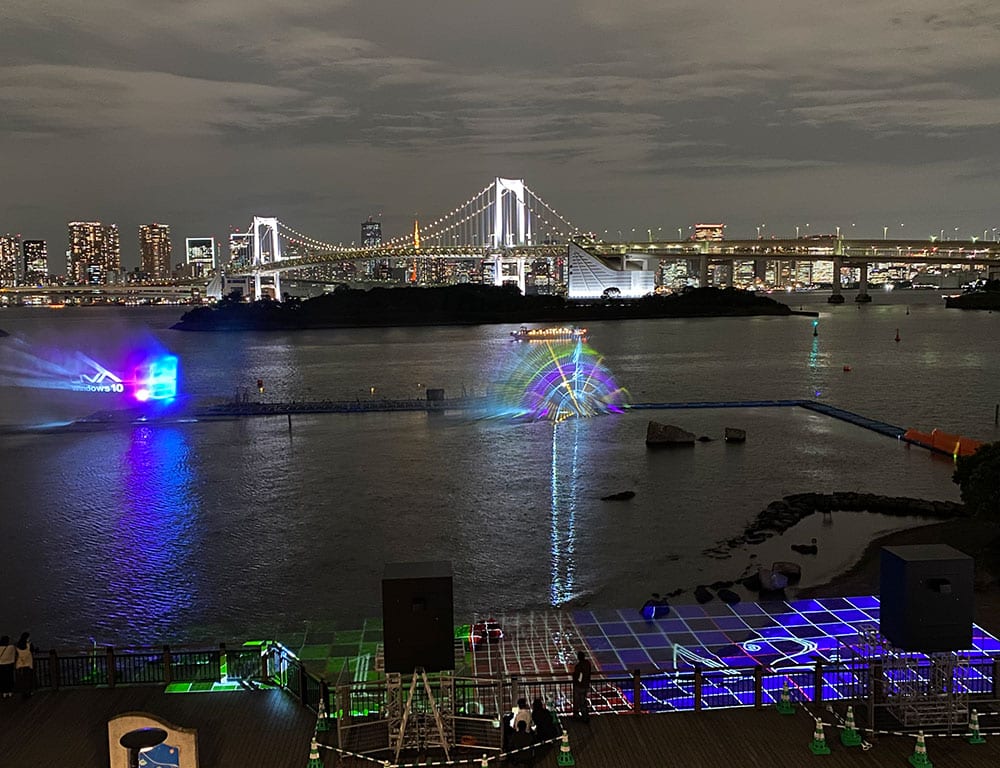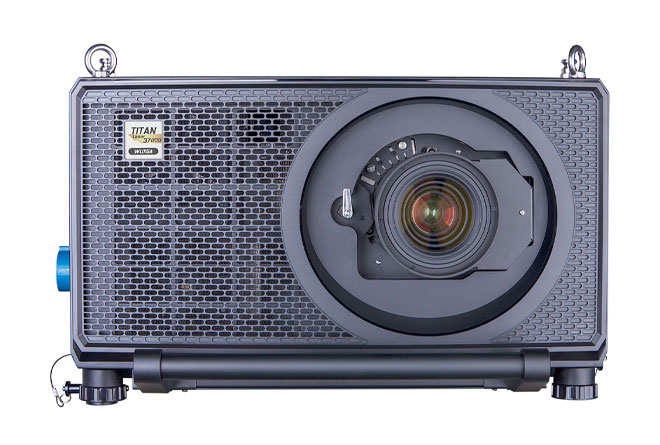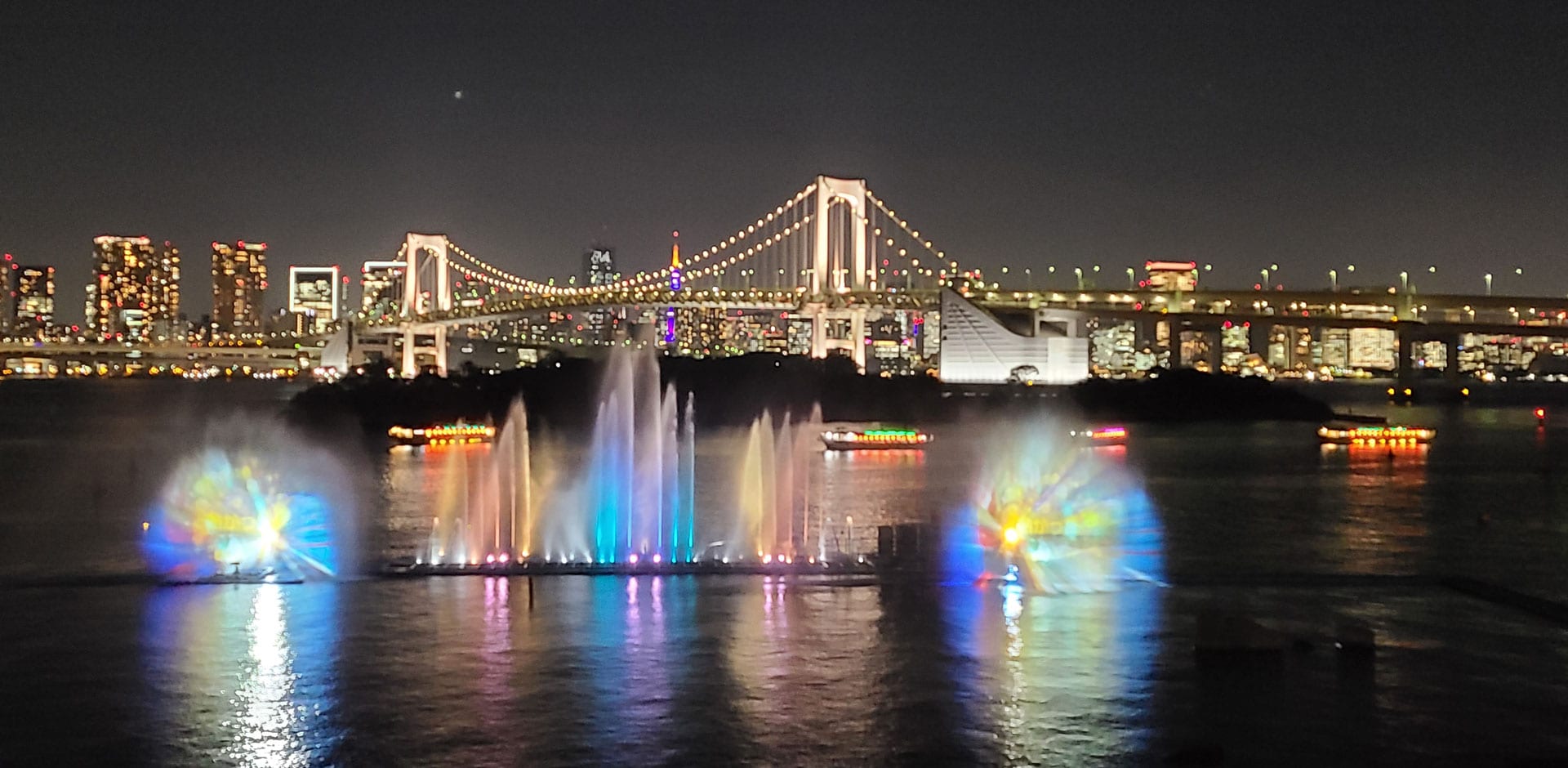
The event organisers needed projectors with the highest possible brightness to prevent the image being washed out by other light sources during the show. This was the main reason they relied on four Digital Projection TITAN lasers with an output of 37,000 lumens to light up two water screens and the beach.
“For a variety of reasons, the design of the water screen and the calculation of the optimum projection angle was a difficult task for the system integrators and our engineers,” explains Aaron Hsu, sales representative manager at Digital Projection Japan. For the projectors, the system integrators built two small huts floating on the water and two towers standing on the beach. “We have put a lot of effort into helping system integrators to design the proper huts and towers,” continues Hsu.
The IP60 Sealed Optics help protect against ingress from the elements that would otherwise degrade the image quality, but because the huts are floating on the sea water, with a high level of salt and humidity, they had to be bespoke to ensure the operating environment of the projectors would never be an issue. To make sure the projectors can display an entire image on the water screens, the engineers had to create a certain degree of slope under the projectors which proved to be a unique challenge as the floating huts are constantly moving.
Digital Projection’s engineers also had to consider the ambient temperature, as the projectors operate in a narrow space. “We had to put environmental monitors near each projector and keep monitoring the temperature and level of humidity from time to time in order to ensure that the projectors operate properly during the event,” describes Hsu.
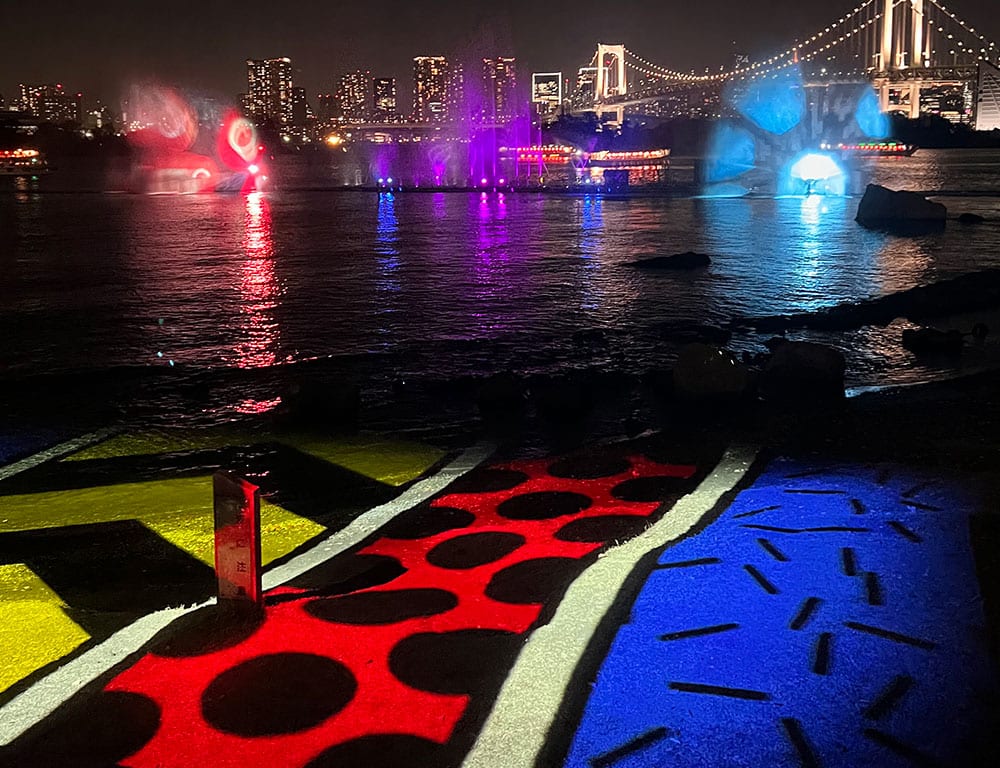
To display the image on the beach, the engineers had to angle the other two projectors by 90 degrees and install them vertically inside 3.5m tall towers. They pointed the projectors up to the sky and used the 0.38:1 UST periscope lens, ensuring enough distance to create a large image that filled the wide expanse
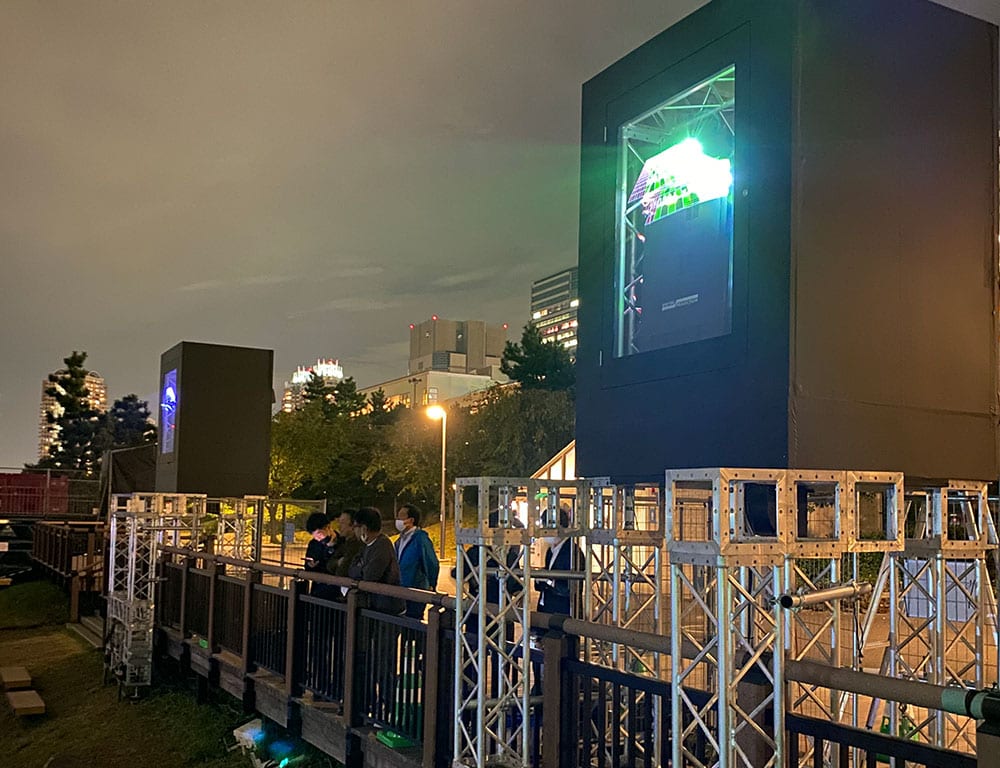
“The installation environment makes this event unique amongst others,” states Hsu. Because the Odaiba Marine Park beach is covered with big rocks and it being a public park, the engineers could not change the landscape. “However, thanks to the TITAN’s excellent blending function, the customer was very happy with the final image quality and the ease with which it could be achieved using the built-in controls,” says Hsu.
“Both the customer and Digital Projection team in Japan spent almost two weeks at the site for the installation and the rehearsal of the show,” states Hsu, who concluded. “The customer was delighted with the end result and impressed with the overall performance of our flagship 3-Chip DLP projectors.”